Start Now
 EN
ENStart Now

✨New
Get All Key Features for Just $6.99



Jump to section
Jump to section
Jump to section
Jump to section
Summarize with
Summarize with
Summarize with

Share
Share
Share
Your course gets 10,000 enrollments. All from the U.S.
Then you check your analytics dashboard. 22% of page visits came from India. 18% from Brazil. 11% from Spain.
They landed on your sales page. They watched the preview video. They left.
That's 51% of potential students you lost because your course wasn't in their language.
Here's what most online educators miss: global e-learning revenue hit $315 billion in 2024. Non-English markets account for 73% of that growth. India's online education market grew 180% year-over-year. Brazil added 8.4 million new online learners in 2024 alone.
Your competitors aren't thinking globally yet. You have a 12-18 month window before everyone figures this out.
Why Course Creators Miss International Revenue Growth
Sarah runs a $297 digital marketing course. She spent six months perfecting her curriculum, recording 47 video lessons, and building a community platform.
Her course sold well in North America. Then she noticed something strange in Google Analytics: visitors from non-English countries had a 3-minute average session time versus 18 minutes for English speakers. Her sales page conversion rate dropped from 4.2% to 0.8% for international traffic.
She wasn't losing sales because of poor content. She was losing them because 89% of global learners prefer courses in their native language, according to data from online education platforms.
The real pain? She'd already created the content. The value was there. The demand existed. Only the language barrier stood between her and 3-5x revenue growth.
Traditional Dubbing Costs That Block Course Localization
Most course creators assume professional dubbing requires hiring voice actors, booking studio sessions, and managing complex production workflows.
Traditional dubbing costs break down like this:
Service | Cost Per Minute | 40-Hour Course Cost |
|---|---|---|
Voice Actor (Per Language) | $150-300 | $360,000-720,000 |
Studio Recording Time | $100-200/hour | $240,000-480,000 |
Audio Engineering | $75-150/hour | $180,000-360,000 |
Quality Control | $50-100/hour | $120,000-240,000 |
Total Per Language | Variable | $900,000-1,800,000 |
For a single language. Now multiply that by Spanish, Portuguese, Hindi, and French.
The math doesn't work for 99% of course creators. Even successful educators with six-figure course revenue can't justify spending $3.6 million on traditional dubbing.
That's why 94% of online courses remain English-only, despite international markets representing the fastest growth opportunity in education.
How AI Video Translation Changes Course Localization
Modern AI technology transforms course dubbing from a luxury expense into a practical growth strategy.
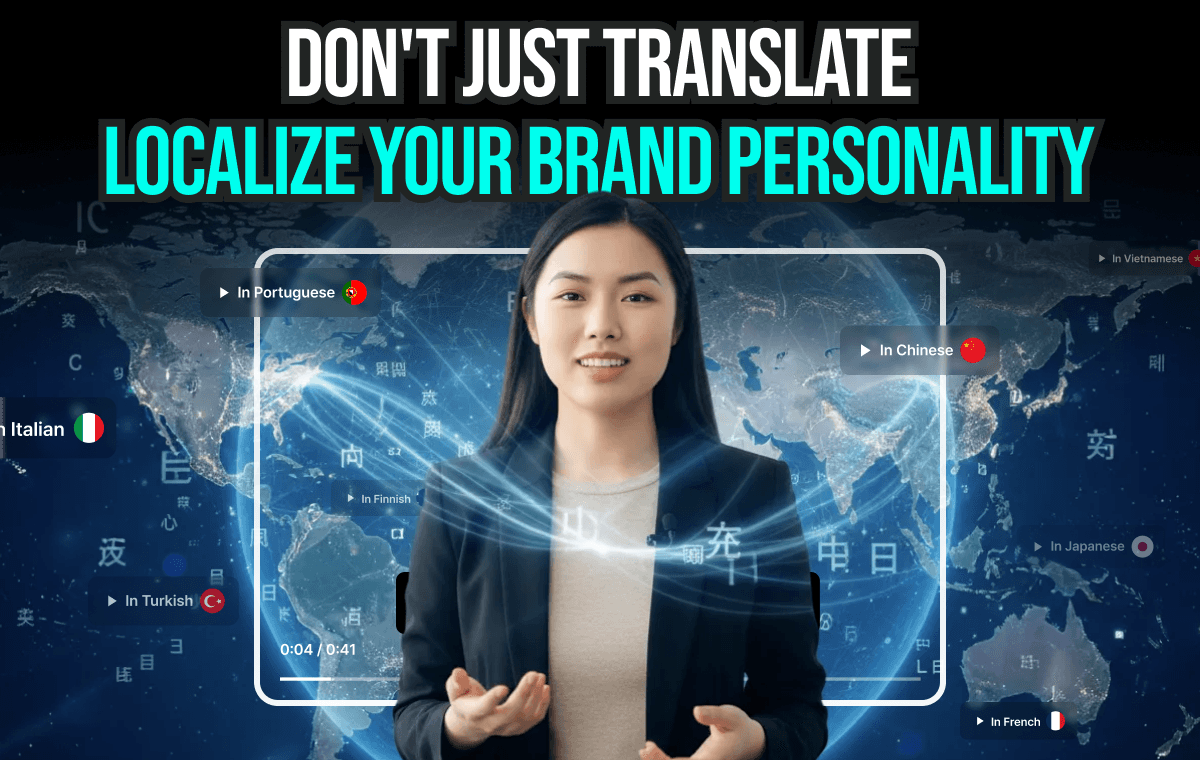
AI-powered automatic video translation for global content handles three critical tasks simultaneously: voice cloning that preserves your teaching style, automatic synchronization that matches your original pacing, and cultural adaptation that ensures your examples resonate across markets.
The shift isn't just about cost. It's about speed and quality consistency across your entire course library.
A 40-hour course that would take 6-8 months through traditional dubbing can now be localized in 72 hours. Your voice remains consistent across every lesson. The lip movements synchronize naturally with translated audio. Students in São Paulo get the same high-quality experience as students in Seattle.
Four Video Localization Methods for Course Creators 2025
Method 1: Manual Subtitles (Low Cost, Limited Impact)
Best for: Testing market interest before full localization investment
Manual subtitle translation costs $1-3 per minute of content. For a 40-hour course, that's $2,400-7,200 per language.
Tools like Rev and Sonix provide transcript extraction and translation services. You upload your video, receive translated SRT files, and embed them in your course platform.
The limitation: Research from e-learning platforms shows that subtitle-only courses have 64% lower completion rates in non-native markets compared to fully dubbed content. Students report higher cognitive load when reading subtitles while trying to absorb complex concepts.
Subtitles work for simple informational content. They struggle with nuanced teaching, emotional connection, and maintaining student engagement through longer lessons.
Method 2: Text-to-Speech Dubbing (Moderate Cost, Robotic Quality)
Best for: Course creators prioritizing information delivery over personality
Basic AI text-to-speech services like Amazon Polly or Google Text-to-Speech cost $4-16 per million characters. A typical 40-hour course translates to roughly $80-320 per language.
The workflow involves transcript extraction, translation, AI voice generator technology for natural-sounding audio, and audio replacement. Processing time runs 2-4 hours per course.
The drawback: Generic TTS voices lack the warmth, emphasis, and teaching presence that builds student trust. Your carefully crafted explanation of compound interest sounds flat when delivered by a robotic voice. Students notice. Completion rates drop 40-55% compared to natural voice dubbing.
Course creators using TTS report higher refund rates and lower course ratings in international markets.
Method 3: Professional Voice Actor Dubbing (High Cost, High Quality)
Best for: Enterprise training programs with substantial localization budgets
Professional dubbing delivers authentic native-speaker quality. Voice actors bring cultural understanding, proper emphasis, and natural delivery to your content.
The investment runs $900,000-1,800,000 per language for a 40-hour course, as detailed earlier. Production timelines stretch 6-8 months when coordinating voice talent, studio availability, and quality review cycles.
This approach makes sense for corporate training deployed to thousands of employees or certification programs with enterprise licensing. For individual course creators and small education companies, the math rarely justifies the investment.
Method 4: AI Voice Cloning with Lip-Sync Technology (Optimal Balance)
Best for: Course creators serious about global expansion without enterprise budgets
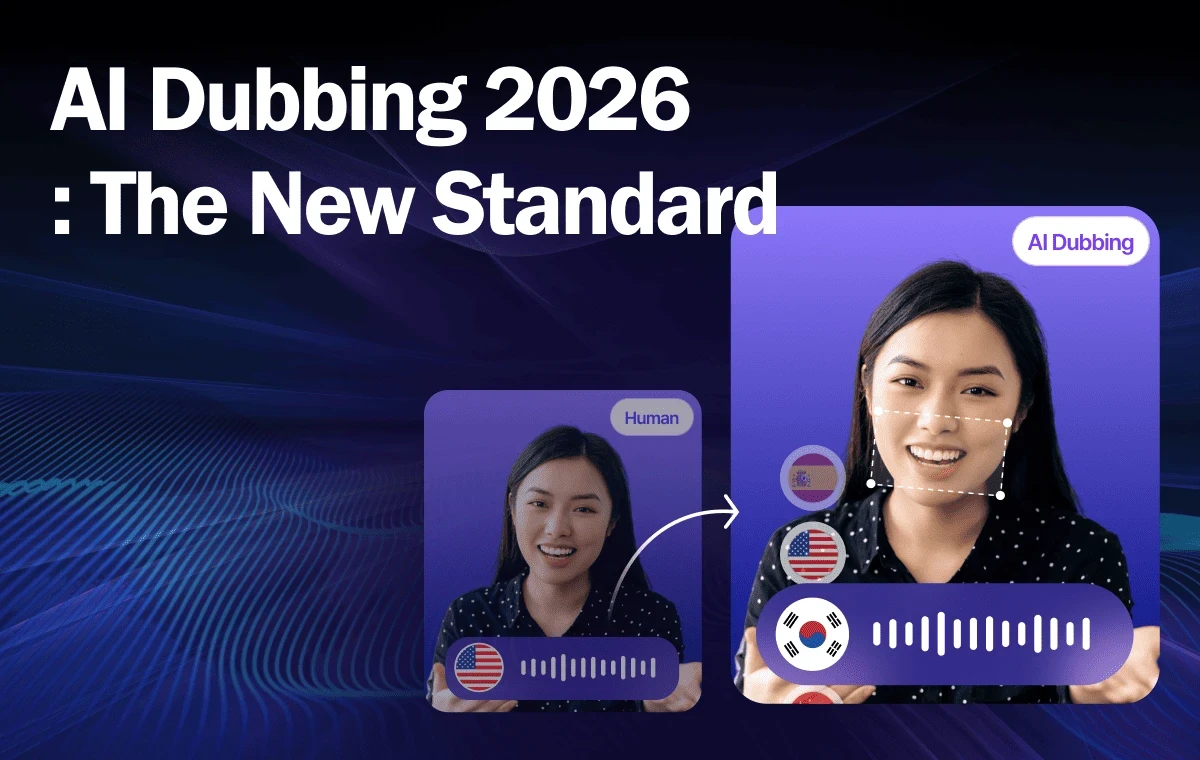
Advanced AI dubbing technology for video localization combines voice cloning, automatic translation, and lip-synchronization into a single workflow.
Here's how it transforms course localization:
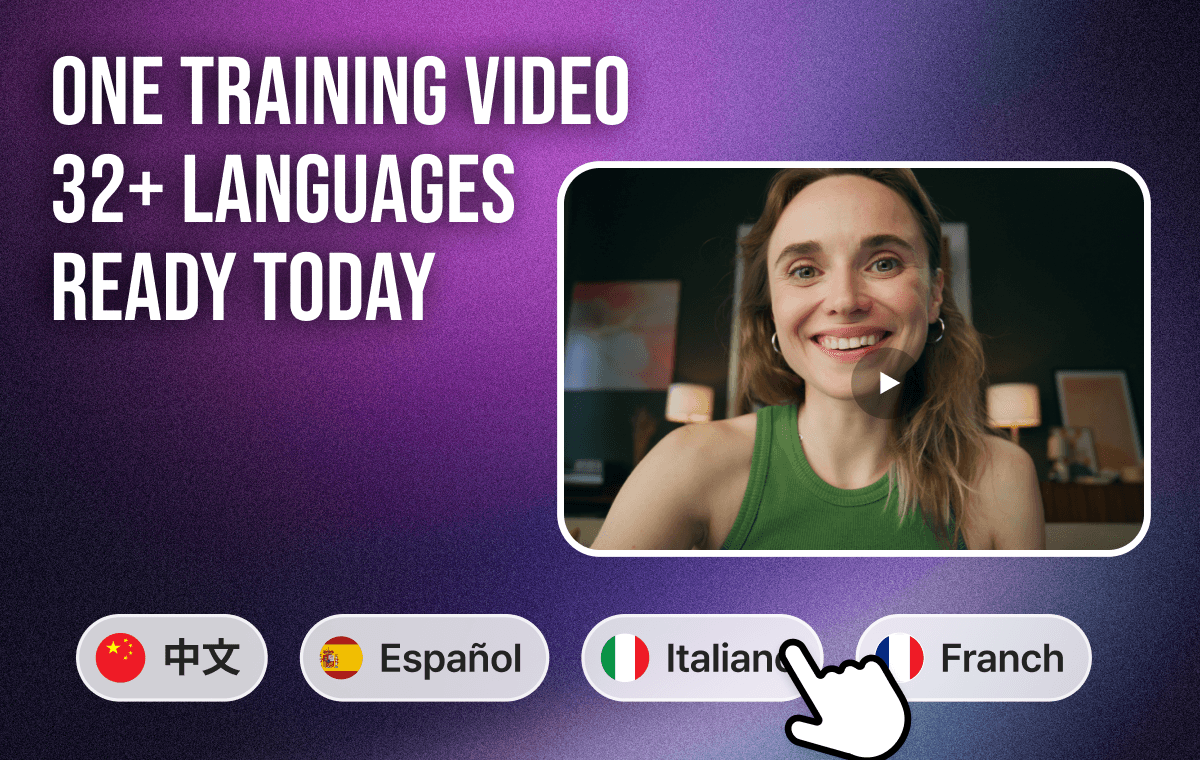
Voice Consistency: The AI voice cloning technology for multilingual content analyzes your voice patterns from existing course videos and generates dubbed versions that maintain your teaching style, tone, and emphasis across 32+ languages. Students in different markets experience consistent instructor presence.
Automatic Lip-Sync: Modern AI lip-sync technology for dubbed videos adjusts mouth movements to match translated audio. When you're explaining financial concepts in English, and the system creates a Portuguese version, your facial expressions and lip movements synchronize naturally with the new audio track.
Cultural Adaptation: The AI adjusts examples and references to resonate with local contexts. A U.S. tax example automatically shifts to relevant local tax concepts in each market. Holiday references, measurement units, and cultural idioms adapt without manual intervention.
Processing Speed: A 40-hour course processes in 48-72 hours. You can launch a fully localized Spanish version of your course this week, test market response, and expand to additional languages based on actual performance data.
Course Creator Results: 161% Revenue Increase With AI
Michael runs a software development course teaching React and JavaScript fundamentals. His course generated $180,000 in annual revenue, entirely from English-speaking students.
After analyzing his traffic data, he noticed 16% of his landing page visitors came from India, where React development jobs were growing 230% year-over-year. Another 14% came from Brazil, a rapidly expanding tech market.
He used AI video translation and dubbing solutions to localize his course into English video to Hindi translation for online courses and English video to Portuguese translation for Brazilian market. Total investment: $2,400. Processing time: 4 days.
90-day results:
Hindi version: 847 new enrollments at $197 each = $166,859
Portuguese version: 623 new enrollments at $197 each = $122,731
Combined revenue: $289,590
Return on investment: 12,066%
The key insight? He didn't create new content. He didn't rebuild his course. He simply made his existing, proven course accessible to markets already searching for the knowledge he taught.
His student testimonials in both markets matched his English course ratings. The value translated. The teaching quality remained consistent. The only difference was language accessibility.
Choosing Your Course Video Localization Strategy for ROI
Priority | Recommended Method | Investment Level | Time to Market |
|---|---|---|---|
Market Testing Only | Manual Subtitles | $2,400-7,200 | 1-2 weeks |
Information-Heavy Content | Text-to-Speech | $80-320 | 2-4 days |
Enterprise Training | Professional Voice Actors | $900,000+ | 6-8 months |
Revenue Growth Focus | AI Voice Cloning + Lip-Sync | $2,000-5,000 | 3-5 days |
Start with data: Review your course platform analytics. Identify which countries generate 10%+ of your traffic. Those markets represent your highest-potential languages.
Test before scaling: Localize your top-performing course module first. Monitor completion rates, student feedback, and revenue conversion. Scale to full course localization once you validate market response.
Critical Mistakes That Kill International Course Sales
Mistake 1: Ignoring Course Metadata Translation
You invest in video dubbing but leave course titles, descriptions, and lesson names in English. International students can't find your course through local search terms.
Every element needs localization:
Course titles optimized for local search behavior
Lesson descriptions using regional terminology
Landing page copy addressing market-specific pain points
Student testimonials from local markets when available
Subtitle and transcript editing tools for accurate translations properly formatted for each language
Mistake 2: One-Size-Fits-All Pricing
A $297 course in the U.S. represents different value in different markets. In India, that's 65% of average monthly salary. In Brazil, it's 40%.
Smart course creators implement regional pricing:
Market | Course Price | Local Purchasing Power |
|---|---|---|
United States | $297 | Baseline |
India | $97 | Optimized for INR conversion |
Brazil | $147 | Adjusted for BRL market |
Spain | $247 | EU purchasing power |
The goal isn't race-to-bottom pricing. It's market-appropriate positioning that maximizes total revenue while respecting local economic realities.
Mistake 3: Ignoring Platform Compatibility
You create perfectly dubbed course videos that won't upload to your learning management system because of file format restrictions.
Before dubbing your entire course library, verify:
Maximum file sizes for your course platform
Supported video formats and codecs
Audio track specifications
Subtitle embedding requirements
Most AI video translation for online course platforms support standard formats, but compatibility testing prevents costly re-processing.
Technical Workflow: English Course to Global Product 2025
Step 1: Market Validation (Week 1)
Review analytics to identify high-potential markets. Look for countries generating 10%+ of your traffic with low enrollment conversion. These represent your priority languages.
Check local competition. Search for your course topic in the target language. If local competitors charge 3-4x what you plan to charge, you've found a viable market.
Step 2: Content Preparation (Week 1)
Export your course videos in highest available quality. Organize files by module and lesson sequence. Create a master spreadsheet tracking video titles, descriptions, and key learning objectives for translation reference.
Generate English transcripts for all videos using automatic video transcription for course content. While AI dubbing handles translation automatically, having reference transcripts helps quality control.
Step 3: AI Dubbing Processing (Week 2)
Upload your course videos to your AI-powered video translation platform for educators. Select target languages based on your market research.
The system processes voice cloning, translation, and lip-sync synchronization automatically. For a 40-hour course, expect 48-72 hours total processing time.
Step 4: Quality Review (Week 2)
Review dubbed videos with native speakers when possible. Focus on:
Technical terminology accuracy
Cultural relevance of examples
Natural voice pacing and emphasis
Lip-sync quality in close-up shots
Most AI dubbing platforms allow minor corrections without full re-processing.
Step 5: Platform Integration (Week 3)
Upload dubbed videos to your course platform. Translate course metadata, landing pages, and enrollment flows. Configure regional pricing if implementing market-specific strategies.
Set up separate course listings for each language or implement language selection within a single course product, depending on your platform capabilities.
Step 6: Market Launch (Week 3-4)
Announce your new language versions through:
Email campaigns to previous international visitors
Social media content in target languages
Paid advertising in priority markets
Partnerships with local education influencers
Track performance metrics separately by language to identify optimization opportunities.
YouTube Video Translation for Course Marketing Success
Many course creators use YouTube content marketing to drive course enrollments. Your AI dubbing for YouTube videos to reach global audiences already attract international viewers. Adding multilingual audio tracks transforms passive viewers into course students.
Here's the strategy: Create localized versions of your best-performing YouTube content using the same top strategies to expand YouTube global audience with translation approach. International viewers discover your content, engage with it in their native language, and become aware of your full course offering.
A photography course creator added English video to Spanish translation for Latin American markets and Portuguese audio tracks to her top 20 YouTube videos. Within 90 days:
Spanish content views increased 340%
Portuguese subscriber growth jumped 280%
Course enrollment from Spanish-speaking markets grew from 3% to 23% of total sales
The content was identical. The teaching was unchanged. Only language accessibility shifted, unlocking markets that were already searching for her expertise.
Converting Corporate Training Clients With Localization
Beyond individual course enrollments, corporate training represents a massive opportunity. Companies increasingly purchase online courses for AI dubbing for employee training and development programs.
When pitching corporate clients in international markets, your ability to transform corporate training with AI dubbing technology becomes a competitive advantage.
Imagine presenting your AI video translation for corporate training solutions to a Brazilian company. Your competitors send English presentations with PDF slides. You send a fully localized video presentation in Portuguese, with natural-sounding narration and culturally relevant examples.
The decision becomes obvious. You've already demonstrated you understand their market and can deliver training content their employees will actually complete.
Building a Global Education Business With Video Dubbing
Smart course creators view AI dubbing for e-learning video localization and modules as a systematic growth strategy, not a one-time project.
Phase 1 (Months 1-3): Market Validation
Localize your best-selling course into 2-3 priority languages. Focus on markets showing existing demand through your analytics data. Measure completion rates, refund rates, and student feedback.
Phase 2 (Months 4-6): Portfolio Expansion
Based on Phase 1 results, expand successful languages across your full course catalog. Add 2-3 additional languages in markets showing strong e-learning growth.
Phase 3 (Months 7-12): Market Optimization
Develop market-specific bonus content addressing local use cases. Partner with local education influencers for co-marketing initiatives. Implement regional pricing strategies based on actual conversion data.
Phase 4 (Year 2+): Category Leadership
You're now one of the few course creators serving global markets effectively. This positioning attracts partnership opportunities, speaking engagements, and corporate training contracts that competitors can't access.
The competitive moat isn't just language access. It's the experience, testimonials, and market presence you've built across multiple countries while competitors remain English-only.
Key Takeaways: AI Video Translation for Courses
Language barriers block 73% of global e-learning revenue. International markets represent the fastest-growing segment of online education, yet 94% of courses remain English-only.
AI dubbing transforms economics and speed. What previously cost $900,000-1,800,000 per language now processes in 72 hours for a fraction of traditional dubbing costs.
Voice consistency drives completion rates. Courses using AI voice cloning maintain instructor presence and teaching style across languages, resulting in completion rates comparable to original English versions.
Start with data, scale with validation. Analyze existing traffic to identify high-potential markets. Test with your best-performing course. Expand based on actual student response and revenue data.
Localization extends beyond video. Success requires translated metadata, regionally appropriate pricing, platform compatibility, and market-specific marketing strategies.
Pick your top-performing course. Identify your highest-traffic international market. Create a localized version this month. The global education market is growing faster than ever, and most of your competition hasn't figured this out yet.
Modern AI video translation platforms for course creators and educators make course localization accessible to individual educators, not just enterprise training departments with million-dollar budgets.
For educators looking to scale their impact globally, comprehensive ultimate guide to video localization from translation to cultural adaptation provide the roadmap from single-market success to international education leadership.
FAQ: AI Dubbing for Online Courses
1. How much does it cost to dub an entire online course with AI technology?
Traditional dubbing with voice actors runs $900,000-1,800,000 per language for a 40-hour course. AI dubbing technology reduces this to $2,000-5,000 per language while maintaining voice consistency and natural delivery. The cost difference makes global expansion practical for individual course creators, not just enterprise training programs.
2. Will AI-dubbed courses have lower completion rates than original content?
Quality AI dubbing with voice cloning maintains comparable completion rates to original English courses. The key factors are voice consistency, accurate lip-sync, and cultural adaptation. Research shows that courses with AI dubbing outperform subtitle-only versions by 64% in completion rates, as students can focus on learning rather than reading text while processing complex concepts.
3. Which languages should course creators prioritize for localization?
Start with markets already generating traffic to your course pages. Check analytics for countries contributing 10%+ of visits but low enrollment conversion. Spanish (475M speakers globally), Portuguese (234M speakers, with Brazil's explosive e-learning growth), and Hindi (600M+ speakers in India's booming education market) typically show highest ROI for course creators. Market demand matters more than total speaker population.
4. How long does it take to localize a 40-hour course with AI dubbing?
AI dubbing processes a 40-hour course in 48-72 hours, compared to 6-8 months for traditional voice actor dubbing. This speed advantage lets you test market response quickly, iterate based on student feedback, and expand to additional languages without long production delays. The faster time-to-market means you can capitalize on trending topics in international markets before competitors enter.
5. Do I need separate course listings for each language version?
Platform capabilities vary. Some learning management systems support language selection within a single course product, while others require separate listings per language. Separate listings offer advantages for market-specific pricing, targeted marketing, and local testimonial integration. Test both approaches with your first localized course to determine what works best for your student experience and marketing strategy.
6. Can AI dubbing handle technical terminology in specialized courses?
Yes, modern AI dubbing systems handle technical terminology effectively when provided with industry context. The key is reviewing dubbed content with subject matter experts in target languages before launch. Most platforms allow terminology correction without full re-processing. Fields like software development, healthcare, finance, and engineering translate successfully when using AI dubbing with proper quality review workflows.
7. How do I market my course in languages I don't speak?
Partner with native-speaking affiliates or education influencers in target markets. Use translated landing pages optimized for local search terms. Run localized paid advertising campaigns on platforms popular in specific regions. The most effective strategy is leveraging AI dubbing for YouTube video content marketing with multilingual audio tracks that drive international viewers to your course enrollment pages through native-language calls-to-action.
8. Should I localize my entire course catalog or start with one course?
Start with your best-selling course. It already has proven market fit, strong student testimonials, and content you're confident in. Localize into 2-3 priority languages based on your traffic data. Monitor completion rates, student satisfaction, and revenue performance for 60-90 days. Scale to additional courses and languages based on validated market response rather than assumptions about global demand.
Your course gets 10,000 enrollments. All from the U.S.
Then you check your analytics dashboard. 22% of page visits came from India. 18% from Brazil. 11% from Spain.
They landed on your sales page. They watched the preview video. They left.
That's 51% of potential students you lost because your course wasn't in their language.
Here's what most online educators miss: global e-learning revenue hit $315 billion in 2024. Non-English markets account for 73% of that growth. India's online education market grew 180% year-over-year. Brazil added 8.4 million new online learners in 2024 alone.
Your competitors aren't thinking globally yet. You have a 12-18 month window before everyone figures this out.
Why Course Creators Miss International Revenue Growth
Sarah runs a $297 digital marketing course. She spent six months perfecting her curriculum, recording 47 video lessons, and building a community platform.
Her course sold well in North America. Then she noticed something strange in Google Analytics: visitors from non-English countries had a 3-minute average session time versus 18 minutes for English speakers. Her sales page conversion rate dropped from 4.2% to 0.8% for international traffic.
She wasn't losing sales because of poor content. She was losing them because 89% of global learners prefer courses in their native language, according to data from online education platforms.
The real pain? She'd already created the content. The value was there. The demand existed. Only the language barrier stood between her and 3-5x revenue growth.
Traditional Dubbing Costs That Block Course Localization
Most course creators assume professional dubbing requires hiring voice actors, booking studio sessions, and managing complex production workflows.
Traditional dubbing costs break down like this:
Service | Cost Per Minute | 40-Hour Course Cost |
|---|---|---|
Voice Actor (Per Language) | $150-300 | $360,000-720,000 |
Studio Recording Time | $100-200/hour | $240,000-480,000 |
Audio Engineering | $75-150/hour | $180,000-360,000 |
Quality Control | $50-100/hour | $120,000-240,000 |
Total Per Language | Variable | $900,000-1,800,000 |
For a single language. Now multiply that by Spanish, Portuguese, Hindi, and French.
The math doesn't work for 99% of course creators. Even successful educators with six-figure course revenue can't justify spending $3.6 million on traditional dubbing.
That's why 94% of online courses remain English-only, despite international markets representing the fastest growth opportunity in education.
How AI Video Translation Changes Course Localization
Modern AI technology transforms course dubbing from a luxury expense into a practical growth strategy.
AI-powered automatic video translation for global content handles three critical tasks simultaneously: voice cloning that preserves your teaching style, automatic synchronization that matches your original pacing, and cultural adaptation that ensures your examples resonate across markets.
The shift isn't just about cost. It's about speed and quality consistency across your entire course library.
A 40-hour course that would take 6-8 months through traditional dubbing can now be localized in 72 hours. Your voice remains consistent across every lesson. The lip movements synchronize naturally with translated audio. Students in São Paulo get the same high-quality experience as students in Seattle.
Four Video Localization Methods for Course Creators 2025
Method 1: Manual Subtitles (Low Cost, Limited Impact)
Best for: Testing market interest before full localization investment
Manual subtitle translation costs $1-3 per minute of content. For a 40-hour course, that's $2,400-7,200 per language.
Tools like Rev and Sonix provide transcript extraction and translation services. You upload your video, receive translated SRT files, and embed them in your course platform.
The limitation: Research from e-learning platforms shows that subtitle-only courses have 64% lower completion rates in non-native markets compared to fully dubbed content. Students report higher cognitive load when reading subtitles while trying to absorb complex concepts.
Subtitles work for simple informational content. They struggle with nuanced teaching, emotional connection, and maintaining student engagement through longer lessons.
Method 2: Text-to-Speech Dubbing (Moderate Cost, Robotic Quality)
Best for: Course creators prioritizing information delivery over personality
Basic AI text-to-speech services like Amazon Polly or Google Text-to-Speech cost $4-16 per million characters. A typical 40-hour course translates to roughly $80-320 per language.
The workflow involves transcript extraction, translation, AI voice generator technology for natural-sounding audio, and audio replacement. Processing time runs 2-4 hours per course.
The drawback: Generic TTS voices lack the warmth, emphasis, and teaching presence that builds student trust. Your carefully crafted explanation of compound interest sounds flat when delivered by a robotic voice. Students notice. Completion rates drop 40-55% compared to natural voice dubbing.
Course creators using TTS report higher refund rates and lower course ratings in international markets.
Method 3: Professional Voice Actor Dubbing (High Cost, High Quality)
Best for: Enterprise training programs with substantial localization budgets
Professional dubbing delivers authentic native-speaker quality. Voice actors bring cultural understanding, proper emphasis, and natural delivery to your content.
The investment runs $900,000-1,800,000 per language for a 40-hour course, as detailed earlier. Production timelines stretch 6-8 months when coordinating voice talent, studio availability, and quality review cycles.
This approach makes sense for corporate training deployed to thousands of employees or certification programs with enterprise licensing. For individual course creators and small education companies, the math rarely justifies the investment.
Method 4: AI Voice Cloning with Lip-Sync Technology (Optimal Balance)
Best for: Course creators serious about global expansion without enterprise budgets
Advanced AI dubbing technology for video localization combines voice cloning, automatic translation, and lip-synchronization into a single workflow.
Here's how it transforms course localization:
Voice Consistency: The AI voice cloning technology for multilingual content analyzes your voice patterns from existing course videos and generates dubbed versions that maintain your teaching style, tone, and emphasis across 32+ languages. Students in different markets experience consistent instructor presence.
Automatic Lip-Sync: Modern AI lip-sync technology for dubbed videos adjusts mouth movements to match translated audio. When you're explaining financial concepts in English, and the system creates a Portuguese version, your facial expressions and lip movements synchronize naturally with the new audio track.
Cultural Adaptation: The AI adjusts examples and references to resonate with local contexts. A U.S. tax example automatically shifts to relevant local tax concepts in each market. Holiday references, measurement units, and cultural idioms adapt without manual intervention.
Processing Speed: A 40-hour course processes in 48-72 hours. You can launch a fully localized Spanish version of your course this week, test market response, and expand to additional languages based on actual performance data.
Course Creator Results: 161% Revenue Increase With AI
Michael runs a software development course teaching React and JavaScript fundamentals. His course generated $180,000 in annual revenue, entirely from English-speaking students.
After analyzing his traffic data, he noticed 16% of his landing page visitors came from India, where React development jobs were growing 230% year-over-year. Another 14% came from Brazil, a rapidly expanding tech market.
He used AI video translation and dubbing solutions to localize his course into English video to Hindi translation for online courses and English video to Portuguese translation for Brazilian market. Total investment: $2,400. Processing time: 4 days.
90-day results:
Hindi version: 847 new enrollments at $197 each = $166,859
Portuguese version: 623 new enrollments at $197 each = $122,731
Combined revenue: $289,590
Return on investment: 12,066%
The key insight? He didn't create new content. He didn't rebuild his course. He simply made his existing, proven course accessible to markets already searching for the knowledge he taught.
His student testimonials in both markets matched his English course ratings. The value translated. The teaching quality remained consistent. The only difference was language accessibility.
Choosing Your Course Video Localization Strategy for ROI
Priority | Recommended Method | Investment Level | Time to Market |
|---|---|---|---|
Market Testing Only | Manual Subtitles | $2,400-7,200 | 1-2 weeks |
Information-Heavy Content | Text-to-Speech | $80-320 | 2-4 days |
Enterprise Training | Professional Voice Actors | $900,000+ | 6-8 months |
Revenue Growth Focus | AI Voice Cloning + Lip-Sync | $2,000-5,000 | 3-5 days |
Start with data: Review your course platform analytics. Identify which countries generate 10%+ of your traffic. Those markets represent your highest-potential languages.
Test before scaling: Localize your top-performing course module first. Monitor completion rates, student feedback, and revenue conversion. Scale to full course localization once you validate market response.
Critical Mistakes That Kill International Course Sales
Mistake 1: Ignoring Course Metadata Translation
You invest in video dubbing but leave course titles, descriptions, and lesson names in English. International students can't find your course through local search terms.
Every element needs localization:
Course titles optimized for local search behavior
Lesson descriptions using regional terminology
Landing page copy addressing market-specific pain points
Student testimonials from local markets when available
Subtitle and transcript editing tools for accurate translations properly formatted for each language
Mistake 2: One-Size-Fits-All Pricing
A $297 course in the U.S. represents different value in different markets. In India, that's 65% of average monthly salary. In Brazil, it's 40%.
Smart course creators implement regional pricing:
Market | Course Price | Local Purchasing Power |
|---|---|---|
United States | $297 | Baseline |
India | $97 | Optimized for INR conversion |
Brazil | $147 | Adjusted for BRL market |
Spain | $247 | EU purchasing power |
The goal isn't race-to-bottom pricing. It's market-appropriate positioning that maximizes total revenue while respecting local economic realities.
Mistake 3: Ignoring Platform Compatibility
You create perfectly dubbed course videos that won't upload to your learning management system because of file format restrictions.
Before dubbing your entire course library, verify:
Maximum file sizes for your course platform
Supported video formats and codecs
Audio track specifications
Subtitle embedding requirements
Most AI video translation for online course platforms support standard formats, but compatibility testing prevents costly re-processing.
Technical Workflow: English Course to Global Product 2025
Step 1: Market Validation (Week 1)
Review analytics to identify high-potential markets. Look for countries generating 10%+ of your traffic with low enrollment conversion. These represent your priority languages.
Check local competition. Search for your course topic in the target language. If local competitors charge 3-4x what you plan to charge, you've found a viable market.
Step 2: Content Preparation (Week 1)
Export your course videos in highest available quality. Organize files by module and lesson sequence. Create a master spreadsheet tracking video titles, descriptions, and key learning objectives for translation reference.
Generate English transcripts for all videos using automatic video transcription for course content. While AI dubbing handles translation automatically, having reference transcripts helps quality control.
Step 3: AI Dubbing Processing (Week 2)
Upload your course videos to your AI-powered video translation platform for educators. Select target languages based on your market research.
The system processes voice cloning, translation, and lip-sync synchronization automatically. For a 40-hour course, expect 48-72 hours total processing time.
Step 4: Quality Review (Week 2)
Review dubbed videos with native speakers when possible. Focus on:
Technical terminology accuracy
Cultural relevance of examples
Natural voice pacing and emphasis
Lip-sync quality in close-up shots
Most AI dubbing platforms allow minor corrections without full re-processing.
Step 5: Platform Integration (Week 3)
Upload dubbed videos to your course platform. Translate course metadata, landing pages, and enrollment flows. Configure regional pricing if implementing market-specific strategies.
Set up separate course listings for each language or implement language selection within a single course product, depending on your platform capabilities.
Step 6: Market Launch (Week 3-4)
Announce your new language versions through:
Email campaigns to previous international visitors
Social media content in target languages
Paid advertising in priority markets
Partnerships with local education influencers
Track performance metrics separately by language to identify optimization opportunities.
YouTube Video Translation for Course Marketing Success
Many course creators use YouTube content marketing to drive course enrollments. Your AI dubbing for YouTube videos to reach global audiences already attract international viewers. Adding multilingual audio tracks transforms passive viewers into course students.
Here's the strategy: Create localized versions of your best-performing YouTube content using the same top strategies to expand YouTube global audience with translation approach. International viewers discover your content, engage with it in their native language, and become aware of your full course offering.
A photography course creator added English video to Spanish translation for Latin American markets and Portuguese audio tracks to her top 20 YouTube videos. Within 90 days:
Spanish content views increased 340%
Portuguese subscriber growth jumped 280%
Course enrollment from Spanish-speaking markets grew from 3% to 23% of total sales
The content was identical. The teaching was unchanged. Only language accessibility shifted, unlocking markets that were already searching for her expertise.
Converting Corporate Training Clients With Localization
Beyond individual course enrollments, corporate training represents a massive opportunity. Companies increasingly purchase online courses for AI dubbing for employee training and development programs.
When pitching corporate clients in international markets, your ability to transform corporate training with AI dubbing technology becomes a competitive advantage.
Imagine presenting your AI video translation for corporate training solutions to a Brazilian company. Your competitors send English presentations with PDF slides. You send a fully localized video presentation in Portuguese, with natural-sounding narration and culturally relevant examples.
The decision becomes obvious. You've already demonstrated you understand their market and can deliver training content their employees will actually complete.
Building a Global Education Business With Video Dubbing
Smart course creators view AI dubbing for e-learning video localization and modules as a systematic growth strategy, not a one-time project.
Phase 1 (Months 1-3): Market Validation
Localize your best-selling course into 2-3 priority languages. Focus on markets showing existing demand through your analytics data. Measure completion rates, refund rates, and student feedback.
Phase 2 (Months 4-6): Portfolio Expansion
Based on Phase 1 results, expand successful languages across your full course catalog. Add 2-3 additional languages in markets showing strong e-learning growth.
Phase 3 (Months 7-12): Market Optimization
Develop market-specific bonus content addressing local use cases. Partner with local education influencers for co-marketing initiatives. Implement regional pricing strategies based on actual conversion data.
Phase 4 (Year 2+): Category Leadership
You're now one of the few course creators serving global markets effectively. This positioning attracts partnership opportunities, speaking engagements, and corporate training contracts that competitors can't access.
The competitive moat isn't just language access. It's the experience, testimonials, and market presence you've built across multiple countries while competitors remain English-only.
Key Takeaways: AI Video Translation for Courses
Language barriers block 73% of global e-learning revenue. International markets represent the fastest-growing segment of online education, yet 94% of courses remain English-only.
AI dubbing transforms economics and speed. What previously cost $900,000-1,800,000 per language now processes in 72 hours for a fraction of traditional dubbing costs.
Voice consistency drives completion rates. Courses using AI voice cloning maintain instructor presence and teaching style across languages, resulting in completion rates comparable to original English versions.
Start with data, scale with validation. Analyze existing traffic to identify high-potential markets. Test with your best-performing course. Expand based on actual student response and revenue data.
Localization extends beyond video. Success requires translated metadata, regionally appropriate pricing, platform compatibility, and market-specific marketing strategies.
Pick your top-performing course. Identify your highest-traffic international market. Create a localized version this month. The global education market is growing faster than ever, and most of your competition hasn't figured this out yet.
Modern AI video translation platforms for course creators and educators make course localization accessible to individual educators, not just enterprise training departments with million-dollar budgets.
For educators looking to scale their impact globally, comprehensive ultimate guide to video localization from translation to cultural adaptation provide the roadmap from single-market success to international education leadership.
FAQ: AI Dubbing for Online Courses
1. How much does it cost to dub an entire online course with AI technology?
Traditional dubbing with voice actors runs $900,000-1,800,000 per language for a 40-hour course. AI dubbing technology reduces this to $2,000-5,000 per language while maintaining voice consistency and natural delivery. The cost difference makes global expansion practical for individual course creators, not just enterprise training programs.
2. Will AI-dubbed courses have lower completion rates than original content?
Quality AI dubbing with voice cloning maintains comparable completion rates to original English courses. The key factors are voice consistency, accurate lip-sync, and cultural adaptation. Research shows that courses with AI dubbing outperform subtitle-only versions by 64% in completion rates, as students can focus on learning rather than reading text while processing complex concepts.
3. Which languages should course creators prioritize for localization?
Start with markets already generating traffic to your course pages. Check analytics for countries contributing 10%+ of visits but low enrollment conversion. Spanish (475M speakers globally), Portuguese (234M speakers, with Brazil's explosive e-learning growth), and Hindi (600M+ speakers in India's booming education market) typically show highest ROI for course creators. Market demand matters more than total speaker population.
4. How long does it take to localize a 40-hour course with AI dubbing?
AI dubbing processes a 40-hour course in 48-72 hours, compared to 6-8 months for traditional voice actor dubbing. This speed advantage lets you test market response quickly, iterate based on student feedback, and expand to additional languages without long production delays. The faster time-to-market means you can capitalize on trending topics in international markets before competitors enter.
5. Do I need separate course listings for each language version?
Platform capabilities vary. Some learning management systems support language selection within a single course product, while others require separate listings per language. Separate listings offer advantages for market-specific pricing, targeted marketing, and local testimonial integration. Test both approaches with your first localized course to determine what works best for your student experience and marketing strategy.
6. Can AI dubbing handle technical terminology in specialized courses?
Yes, modern AI dubbing systems handle technical terminology effectively when provided with industry context. The key is reviewing dubbed content with subject matter experts in target languages before launch. Most platforms allow terminology correction without full re-processing. Fields like software development, healthcare, finance, and engineering translate successfully when using AI dubbing with proper quality review workflows.
7. How do I market my course in languages I don't speak?
Partner with native-speaking affiliates or education influencers in target markets. Use translated landing pages optimized for local search terms. Run localized paid advertising campaigns on platforms popular in specific regions. The most effective strategy is leveraging AI dubbing for YouTube video content marketing with multilingual audio tracks that drive international viewers to your course enrollment pages through native-language calls-to-action.
8. Should I localize my entire course catalog or start with one course?
Start with your best-selling course. It already has proven market fit, strong student testimonials, and content you're confident in. Localize into 2-3 priority languages based on your traffic data. Monitor completion rates, student satisfaction, and revenue performance for 60-90 days. Scale to additional courses and languages based on validated market response rather than assumptions about global demand.
Your course gets 10,000 enrollments. All from the U.S.
Then you check your analytics dashboard. 22% of page visits came from India. 18% from Brazil. 11% from Spain.
They landed on your sales page. They watched the preview video. They left.
That's 51% of potential students you lost because your course wasn't in their language.
Here's what most online educators miss: global e-learning revenue hit $315 billion in 2024. Non-English markets account for 73% of that growth. India's online education market grew 180% year-over-year. Brazil added 8.4 million new online learners in 2024 alone.
Your competitors aren't thinking globally yet. You have a 12-18 month window before everyone figures this out.
Why Course Creators Miss International Revenue Growth
Sarah runs a $297 digital marketing course. She spent six months perfecting her curriculum, recording 47 video lessons, and building a community platform.
Her course sold well in North America. Then she noticed something strange in Google Analytics: visitors from non-English countries had a 3-minute average session time versus 18 minutes for English speakers. Her sales page conversion rate dropped from 4.2% to 0.8% for international traffic.
She wasn't losing sales because of poor content. She was losing them because 89% of global learners prefer courses in their native language, according to data from online education platforms.
The real pain? She'd already created the content. The value was there. The demand existed. Only the language barrier stood between her and 3-5x revenue growth.
Traditional Dubbing Costs That Block Course Localization
Most course creators assume professional dubbing requires hiring voice actors, booking studio sessions, and managing complex production workflows.
Traditional dubbing costs break down like this:
Service | Cost Per Minute | 40-Hour Course Cost |
|---|---|---|
Voice Actor (Per Language) | $150-300 | $360,000-720,000 |
Studio Recording Time | $100-200/hour | $240,000-480,000 |
Audio Engineering | $75-150/hour | $180,000-360,000 |
Quality Control | $50-100/hour | $120,000-240,000 |
Total Per Language | Variable | $900,000-1,800,000 |
For a single language. Now multiply that by Spanish, Portuguese, Hindi, and French.
The math doesn't work for 99% of course creators. Even successful educators with six-figure course revenue can't justify spending $3.6 million on traditional dubbing.
That's why 94% of online courses remain English-only, despite international markets representing the fastest growth opportunity in education.
How AI Video Translation Changes Course Localization
Modern AI technology transforms course dubbing from a luxury expense into a practical growth strategy.
AI-powered automatic video translation for global content handles three critical tasks simultaneously: voice cloning that preserves your teaching style, automatic synchronization that matches your original pacing, and cultural adaptation that ensures your examples resonate across markets.
The shift isn't just about cost. It's about speed and quality consistency across your entire course library.
A 40-hour course that would take 6-8 months through traditional dubbing can now be localized in 72 hours. Your voice remains consistent across every lesson. The lip movements synchronize naturally with translated audio. Students in São Paulo get the same high-quality experience as students in Seattle.
Four Video Localization Methods for Course Creators 2025
Method 1: Manual Subtitles (Low Cost, Limited Impact)
Best for: Testing market interest before full localization investment
Manual subtitle translation costs $1-3 per minute of content. For a 40-hour course, that's $2,400-7,200 per language.
Tools like Rev and Sonix provide transcript extraction and translation services. You upload your video, receive translated SRT files, and embed them in your course platform.
The limitation: Research from e-learning platforms shows that subtitle-only courses have 64% lower completion rates in non-native markets compared to fully dubbed content. Students report higher cognitive load when reading subtitles while trying to absorb complex concepts.
Subtitles work for simple informational content. They struggle with nuanced teaching, emotional connection, and maintaining student engagement through longer lessons.
Method 2: Text-to-Speech Dubbing (Moderate Cost, Robotic Quality)
Best for: Course creators prioritizing information delivery over personality
Basic AI text-to-speech services like Amazon Polly or Google Text-to-Speech cost $4-16 per million characters. A typical 40-hour course translates to roughly $80-320 per language.
The workflow involves transcript extraction, translation, AI voice generator technology for natural-sounding audio, and audio replacement. Processing time runs 2-4 hours per course.
The drawback: Generic TTS voices lack the warmth, emphasis, and teaching presence that builds student trust. Your carefully crafted explanation of compound interest sounds flat when delivered by a robotic voice. Students notice. Completion rates drop 40-55% compared to natural voice dubbing.
Course creators using TTS report higher refund rates and lower course ratings in international markets.
Method 3: Professional Voice Actor Dubbing (High Cost, High Quality)
Best for: Enterprise training programs with substantial localization budgets
Professional dubbing delivers authentic native-speaker quality. Voice actors bring cultural understanding, proper emphasis, and natural delivery to your content.
The investment runs $900,000-1,800,000 per language for a 40-hour course, as detailed earlier. Production timelines stretch 6-8 months when coordinating voice talent, studio availability, and quality review cycles.
This approach makes sense for corporate training deployed to thousands of employees or certification programs with enterprise licensing. For individual course creators and small education companies, the math rarely justifies the investment.
Method 4: AI Voice Cloning with Lip-Sync Technology (Optimal Balance)
Best for: Course creators serious about global expansion without enterprise budgets
Advanced AI dubbing technology for video localization combines voice cloning, automatic translation, and lip-synchronization into a single workflow.
Here's how it transforms course localization:
Voice Consistency: The AI voice cloning technology for multilingual content analyzes your voice patterns from existing course videos and generates dubbed versions that maintain your teaching style, tone, and emphasis across 32+ languages. Students in different markets experience consistent instructor presence.
Automatic Lip-Sync: Modern AI lip-sync technology for dubbed videos adjusts mouth movements to match translated audio. When you're explaining financial concepts in English, and the system creates a Portuguese version, your facial expressions and lip movements synchronize naturally with the new audio track.
Cultural Adaptation: The AI adjusts examples and references to resonate with local contexts. A U.S. tax example automatically shifts to relevant local tax concepts in each market. Holiday references, measurement units, and cultural idioms adapt without manual intervention.
Processing Speed: A 40-hour course processes in 48-72 hours. You can launch a fully localized Spanish version of your course this week, test market response, and expand to additional languages based on actual performance data.
Course Creator Results: 161% Revenue Increase With AI
Michael runs a software development course teaching React and JavaScript fundamentals. His course generated $180,000 in annual revenue, entirely from English-speaking students.
After analyzing his traffic data, he noticed 16% of his landing page visitors came from India, where React development jobs were growing 230% year-over-year. Another 14% came from Brazil, a rapidly expanding tech market.
He used AI video translation and dubbing solutions to localize his course into English video to Hindi translation for online courses and English video to Portuguese translation for Brazilian market. Total investment: $2,400. Processing time: 4 days.
90-day results:
Hindi version: 847 new enrollments at $197 each = $166,859
Portuguese version: 623 new enrollments at $197 each = $122,731
Combined revenue: $289,590
Return on investment: 12,066%
The key insight? He didn't create new content. He didn't rebuild his course. He simply made his existing, proven course accessible to markets already searching for the knowledge he taught.
His student testimonials in both markets matched his English course ratings. The value translated. The teaching quality remained consistent. The only difference was language accessibility.
Choosing Your Course Video Localization Strategy for ROI
Priority | Recommended Method | Investment Level | Time to Market |
|---|---|---|---|
Market Testing Only | Manual Subtitles | $2,400-7,200 | 1-2 weeks |
Information-Heavy Content | Text-to-Speech | $80-320 | 2-4 days |
Enterprise Training | Professional Voice Actors | $900,000+ | 6-8 months |
Revenue Growth Focus | AI Voice Cloning + Lip-Sync | $2,000-5,000 | 3-5 days |
Start with data: Review your course platform analytics. Identify which countries generate 10%+ of your traffic. Those markets represent your highest-potential languages.
Test before scaling: Localize your top-performing course module first. Monitor completion rates, student feedback, and revenue conversion. Scale to full course localization once you validate market response.
Critical Mistakes That Kill International Course Sales
Mistake 1: Ignoring Course Metadata Translation
You invest in video dubbing but leave course titles, descriptions, and lesson names in English. International students can't find your course through local search terms.
Every element needs localization:
Course titles optimized for local search behavior
Lesson descriptions using regional terminology
Landing page copy addressing market-specific pain points
Student testimonials from local markets when available
Subtitle and transcript editing tools for accurate translations properly formatted for each language
Mistake 2: One-Size-Fits-All Pricing
A $297 course in the U.S. represents different value in different markets. In India, that's 65% of average monthly salary. In Brazil, it's 40%.
Smart course creators implement regional pricing:
Market | Course Price | Local Purchasing Power |
|---|---|---|
United States | $297 | Baseline |
India | $97 | Optimized for INR conversion |
Brazil | $147 | Adjusted for BRL market |
Spain | $247 | EU purchasing power |
The goal isn't race-to-bottom pricing. It's market-appropriate positioning that maximizes total revenue while respecting local economic realities.
Mistake 3: Ignoring Platform Compatibility
You create perfectly dubbed course videos that won't upload to your learning management system because of file format restrictions.
Before dubbing your entire course library, verify:
Maximum file sizes for your course platform
Supported video formats and codecs
Audio track specifications
Subtitle embedding requirements
Most AI video translation for online course platforms support standard formats, but compatibility testing prevents costly re-processing.
Technical Workflow: English Course to Global Product 2025
Step 1: Market Validation (Week 1)
Review analytics to identify high-potential markets. Look for countries generating 10%+ of your traffic with low enrollment conversion. These represent your priority languages.
Check local competition. Search for your course topic in the target language. If local competitors charge 3-4x what you plan to charge, you've found a viable market.
Step 2: Content Preparation (Week 1)
Export your course videos in highest available quality. Organize files by module and lesson sequence. Create a master spreadsheet tracking video titles, descriptions, and key learning objectives for translation reference.
Generate English transcripts for all videos using automatic video transcription for course content. While AI dubbing handles translation automatically, having reference transcripts helps quality control.
Step 3: AI Dubbing Processing (Week 2)
Upload your course videos to your AI-powered video translation platform for educators. Select target languages based on your market research.
The system processes voice cloning, translation, and lip-sync synchronization automatically. For a 40-hour course, expect 48-72 hours total processing time.
Step 4: Quality Review (Week 2)
Review dubbed videos with native speakers when possible. Focus on:
Technical terminology accuracy
Cultural relevance of examples
Natural voice pacing and emphasis
Lip-sync quality in close-up shots
Most AI dubbing platforms allow minor corrections without full re-processing.
Step 5: Platform Integration (Week 3)
Upload dubbed videos to your course platform. Translate course metadata, landing pages, and enrollment flows. Configure regional pricing if implementing market-specific strategies.
Set up separate course listings for each language or implement language selection within a single course product, depending on your platform capabilities.
Step 6: Market Launch (Week 3-4)
Announce your new language versions through:
Email campaigns to previous international visitors
Social media content in target languages
Paid advertising in priority markets
Partnerships with local education influencers
Track performance metrics separately by language to identify optimization opportunities.
YouTube Video Translation for Course Marketing Success
Many course creators use YouTube content marketing to drive course enrollments. Your AI dubbing for YouTube videos to reach global audiences already attract international viewers. Adding multilingual audio tracks transforms passive viewers into course students.
Here's the strategy: Create localized versions of your best-performing YouTube content using the same top strategies to expand YouTube global audience with translation approach. International viewers discover your content, engage with it in their native language, and become aware of your full course offering.
A photography course creator added English video to Spanish translation for Latin American markets and Portuguese audio tracks to her top 20 YouTube videos. Within 90 days:
Spanish content views increased 340%
Portuguese subscriber growth jumped 280%
Course enrollment from Spanish-speaking markets grew from 3% to 23% of total sales
The content was identical. The teaching was unchanged. Only language accessibility shifted, unlocking markets that were already searching for her expertise.
Converting Corporate Training Clients With Localization
Beyond individual course enrollments, corporate training represents a massive opportunity. Companies increasingly purchase online courses for AI dubbing for employee training and development programs.
When pitching corporate clients in international markets, your ability to transform corporate training with AI dubbing technology becomes a competitive advantage.
Imagine presenting your AI video translation for corporate training solutions to a Brazilian company. Your competitors send English presentations with PDF slides. You send a fully localized video presentation in Portuguese, with natural-sounding narration and culturally relevant examples.
The decision becomes obvious. You've already demonstrated you understand their market and can deliver training content their employees will actually complete.
Building a Global Education Business With Video Dubbing
Smart course creators view AI dubbing for e-learning video localization and modules as a systematic growth strategy, not a one-time project.
Phase 1 (Months 1-3): Market Validation
Localize your best-selling course into 2-3 priority languages. Focus on markets showing existing demand through your analytics data. Measure completion rates, refund rates, and student feedback.
Phase 2 (Months 4-6): Portfolio Expansion
Based on Phase 1 results, expand successful languages across your full course catalog. Add 2-3 additional languages in markets showing strong e-learning growth.
Phase 3 (Months 7-12): Market Optimization
Develop market-specific bonus content addressing local use cases. Partner with local education influencers for co-marketing initiatives. Implement regional pricing strategies based on actual conversion data.
Phase 4 (Year 2+): Category Leadership
You're now one of the few course creators serving global markets effectively. This positioning attracts partnership opportunities, speaking engagements, and corporate training contracts that competitors can't access.
The competitive moat isn't just language access. It's the experience, testimonials, and market presence you've built across multiple countries while competitors remain English-only.
Key Takeaways: AI Video Translation for Courses
Language barriers block 73% of global e-learning revenue. International markets represent the fastest-growing segment of online education, yet 94% of courses remain English-only.
AI dubbing transforms economics and speed. What previously cost $900,000-1,800,000 per language now processes in 72 hours for a fraction of traditional dubbing costs.
Voice consistency drives completion rates. Courses using AI voice cloning maintain instructor presence and teaching style across languages, resulting in completion rates comparable to original English versions.
Start with data, scale with validation. Analyze existing traffic to identify high-potential markets. Test with your best-performing course. Expand based on actual student response and revenue data.
Localization extends beyond video. Success requires translated metadata, regionally appropriate pricing, platform compatibility, and market-specific marketing strategies.
Pick your top-performing course. Identify your highest-traffic international market. Create a localized version this month. The global education market is growing faster than ever, and most of your competition hasn't figured this out yet.
Modern AI video translation platforms for course creators and educators make course localization accessible to individual educators, not just enterprise training departments with million-dollar budgets.
For educators looking to scale their impact globally, comprehensive ultimate guide to video localization from translation to cultural adaptation provide the roadmap from single-market success to international education leadership.
FAQ: AI Dubbing for Online Courses
1. How much does it cost to dub an entire online course with AI technology?
Traditional dubbing with voice actors runs $900,000-1,800,000 per language for a 40-hour course. AI dubbing technology reduces this to $2,000-5,000 per language while maintaining voice consistency and natural delivery. The cost difference makes global expansion practical for individual course creators, not just enterprise training programs.
2. Will AI-dubbed courses have lower completion rates than original content?
Quality AI dubbing with voice cloning maintains comparable completion rates to original English courses. The key factors are voice consistency, accurate lip-sync, and cultural adaptation. Research shows that courses with AI dubbing outperform subtitle-only versions by 64% in completion rates, as students can focus on learning rather than reading text while processing complex concepts.
3. Which languages should course creators prioritize for localization?
Start with markets already generating traffic to your course pages. Check analytics for countries contributing 10%+ of visits but low enrollment conversion. Spanish (475M speakers globally), Portuguese (234M speakers, with Brazil's explosive e-learning growth), and Hindi (600M+ speakers in India's booming education market) typically show highest ROI for course creators. Market demand matters more than total speaker population.
4. How long does it take to localize a 40-hour course with AI dubbing?
AI dubbing processes a 40-hour course in 48-72 hours, compared to 6-8 months for traditional voice actor dubbing. This speed advantage lets you test market response quickly, iterate based on student feedback, and expand to additional languages without long production delays. The faster time-to-market means you can capitalize on trending topics in international markets before competitors enter.
5. Do I need separate course listings for each language version?
Platform capabilities vary. Some learning management systems support language selection within a single course product, while others require separate listings per language. Separate listings offer advantages for market-specific pricing, targeted marketing, and local testimonial integration. Test both approaches with your first localized course to determine what works best for your student experience and marketing strategy.
6. Can AI dubbing handle technical terminology in specialized courses?
Yes, modern AI dubbing systems handle technical terminology effectively when provided with industry context. The key is reviewing dubbed content with subject matter experts in target languages before launch. Most platforms allow terminology correction without full re-processing. Fields like software development, healthcare, finance, and engineering translate successfully when using AI dubbing with proper quality review workflows.
7. How do I market my course in languages I don't speak?
Partner with native-speaking affiliates or education influencers in target markets. Use translated landing pages optimized for local search terms. Run localized paid advertising campaigns on platforms popular in specific regions. The most effective strategy is leveraging AI dubbing for YouTube video content marketing with multilingual audio tracks that drive international viewers to your course enrollment pages through native-language calls-to-action.
8. Should I localize my entire course catalog or start with one course?
Start with your best-selling course. It already has proven market fit, strong student testimonials, and content you're confident in. Localize into 2-3 priority languages based on your traffic data. Monitor completion rates, student satisfaction, and revenue performance for 60-90 days. Scale to additional courses and languages based on validated market response rather than assumptions about global demand.
Your course gets 10,000 enrollments. All from the U.S.
Then you check your analytics dashboard. 22% of page visits came from India. 18% from Brazil. 11% from Spain.
They landed on your sales page. They watched the preview video. They left.
That's 51% of potential students you lost because your course wasn't in their language.
Here's what most online educators miss: global e-learning revenue hit $315 billion in 2024. Non-English markets account for 73% of that growth. India's online education market grew 180% year-over-year. Brazil added 8.4 million new online learners in 2024 alone.
Your competitors aren't thinking globally yet. You have a 12-18 month window before everyone figures this out.
Why Course Creators Miss International Revenue Growth
Sarah runs a $297 digital marketing course. She spent six months perfecting her curriculum, recording 47 video lessons, and building a community platform.
Her course sold well in North America. Then she noticed something strange in Google Analytics: visitors from non-English countries had a 3-minute average session time versus 18 minutes for English speakers. Her sales page conversion rate dropped from 4.2% to 0.8% for international traffic.
She wasn't losing sales because of poor content. She was losing them because 89% of global learners prefer courses in their native language, according to data from online education platforms.
The real pain? She'd already created the content. The value was there. The demand existed. Only the language barrier stood between her and 3-5x revenue growth.
Traditional Dubbing Costs That Block Course Localization
Most course creators assume professional dubbing requires hiring voice actors, booking studio sessions, and managing complex production workflows.
Traditional dubbing costs break down like this:
Service | Cost Per Minute | 40-Hour Course Cost |
|---|---|---|
Voice Actor (Per Language) | $150-300 | $360,000-720,000 |
Studio Recording Time | $100-200/hour | $240,000-480,000 |
Audio Engineering | $75-150/hour | $180,000-360,000 |
Quality Control | $50-100/hour | $120,000-240,000 |
Total Per Language | Variable | $900,000-1,800,000 |
For a single language. Now multiply that by Spanish, Portuguese, Hindi, and French.
The math doesn't work for 99% of course creators. Even successful educators with six-figure course revenue can't justify spending $3.6 million on traditional dubbing.
That's why 94% of online courses remain English-only, despite international markets representing the fastest growth opportunity in education.
How AI Video Translation Changes Course Localization
Modern AI technology transforms course dubbing from a luxury expense into a practical growth strategy.
AI-powered automatic video translation for global content handles three critical tasks simultaneously: voice cloning that preserves your teaching style, automatic synchronization that matches your original pacing, and cultural adaptation that ensures your examples resonate across markets.
The shift isn't just about cost. It's about speed and quality consistency across your entire course library.
A 40-hour course that would take 6-8 months through traditional dubbing can now be localized in 72 hours. Your voice remains consistent across every lesson. The lip movements synchronize naturally with translated audio. Students in São Paulo get the same high-quality experience as students in Seattle.
Four Video Localization Methods for Course Creators 2025
Method 1: Manual Subtitles (Low Cost, Limited Impact)
Best for: Testing market interest before full localization investment
Manual subtitle translation costs $1-3 per minute of content. For a 40-hour course, that's $2,400-7,200 per language.
Tools like Rev and Sonix provide transcript extraction and translation services. You upload your video, receive translated SRT files, and embed them in your course platform.
The limitation: Research from e-learning platforms shows that subtitle-only courses have 64% lower completion rates in non-native markets compared to fully dubbed content. Students report higher cognitive load when reading subtitles while trying to absorb complex concepts.
Subtitles work for simple informational content. They struggle with nuanced teaching, emotional connection, and maintaining student engagement through longer lessons.
Method 2: Text-to-Speech Dubbing (Moderate Cost, Robotic Quality)
Best for: Course creators prioritizing information delivery over personality
Basic AI text-to-speech services like Amazon Polly or Google Text-to-Speech cost $4-16 per million characters. A typical 40-hour course translates to roughly $80-320 per language.
The workflow involves transcript extraction, translation, AI voice generator technology for natural-sounding audio, and audio replacement. Processing time runs 2-4 hours per course.
The drawback: Generic TTS voices lack the warmth, emphasis, and teaching presence that builds student trust. Your carefully crafted explanation of compound interest sounds flat when delivered by a robotic voice. Students notice. Completion rates drop 40-55% compared to natural voice dubbing.
Course creators using TTS report higher refund rates and lower course ratings in international markets.
Method 3: Professional Voice Actor Dubbing (High Cost, High Quality)
Best for: Enterprise training programs with substantial localization budgets
Professional dubbing delivers authentic native-speaker quality. Voice actors bring cultural understanding, proper emphasis, and natural delivery to your content.
The investment runs $900,000-1,800,000 per language for a 40-hour course, as detailed earlier. Production timelines stretch 6-8 months when coordinating voice talent, studio availability, and quality review cycles.
This approach makes sense for corporate training deployed to thousands of employees or certification programs with enterprise licensing. For individual course creators and small education companies, the math rarely justifies the investment.
Method 4: AI Voice Cloning with Lip-Sync Technology (Optimal Balance)
Best for: Course creators serious about global expansion without enterprise budgets
Advanced AI dubbing technology for video localization combines voice cloning, automatic translation, and lip-synchronization into a single workflow.
Here's how it transforms course localization:
Voice Consistency: The AI voice cloning technology for multilingual content analyzes your voice patterns from existing course videos and generates dubbed versions that maintain your teaching style, tone, and emphasis across 32+ languages. Students in different markets experience consistent instructor presence.
Automatic Lip-Sync: Modern AI lip-sync technology for dubbed videos adjusts mouth movements to match translated audio. When you're explaining financial concepts in English, and the system creates a Portuguese version, your facial expressions and lip movements synchronize naturally with the new audio track.
Cultural Adaptation: The AI adjusts examples and references to resonate with local contexts. A U.S. tax example automatically shifts to relevant local tax concepts in each market. Holiday references, measurement units, and cultural idioms adapt without manual intervention.
Processing Speed: A 40-hour course processes in 48-72 hours. You can launch a fully localized Spanish version of your course this week, test market response, and expand to additional languages based on actual performance data.
Course Creator Results: 161% Revenue Increase With AI
Michael runs a software development course teaching React and JavaScript fundamentals. His course generated $180,000 in annual revenue, entirely from English-speaking students.
After analyzing his traffic data, he noticed 16% of his landing page visitors came from India, where React development jobs were growing 230% year-over-year. Another 14% came from Brazil, a rapidly expanding tech market.
He used AI video translation and dubbing solutions to localize his course into English video to Hindi translation for online courses and English video to Portuguese translation for Brazilian market. Total investment: $2,400. Processing time: 4 days.
90-day results:
Hindi version: 847 new enrollments at $197 each = $166,859
Portuguese version: 623 new enrollments at $197 each = $122,731
Combined revenue: $289,590
Return on investment: 12,066%
The key insight? He didn't create new content. He didn't rebuild his course. He simply made his existing, proven course accessible to markets already searching for the knowledge he taught.
His student testimonials in both markets matched his English course ratings. The value translated. The teaching quality remained consistent. The only difference was language accessibility.
Choosing Your Course Video Localization Strategy for ROI
Priority | Recommended Method | Investment Level | Time to Market |
|---|---|---|---|
Market Testing Only | Manual Subtitles | $2,400-7,200 | 1-2 weeks |
Information-Heavy Content | Text-to-Speech | $80-320 | 2-4 days |
Enterprise Training | Professional Voice Actors | $900,000+ | 6-8 months |
Revenue Growth Focus | AI Voice Cloning + Lip-Sync | $2,000-5,000 | 3-5 days |
Start with data: Review your course platform analytics. Identify which countries generate 10%+ of your traffic. Those markets represent your highest-potential languages.
Test before scaling: Localize your top-performing course module first. Monitor completion rates, student feedback, and revenue conversion. Scale to full course localization once you validate market response.
Critical Mistakes That Kill International Course Sales
Mistake 1: Ignoring Course Metadata Translation
You invest in video dubbing but leave course titles, descriptions, and lesson names in English. International students can't find your course through local search terms.
Every element needs localization:
Course titles optimized for local search behavior
Lesson descriptions using regional terminology
Landing page copy addressing market-specific pain points
Student testimonials from local markets when available
Subtitle and transcript editing tools for accurate translations properly formatted for each language
Mistake 2: One-Size-Fits-All Pricing
A $297 course in the U.S. represents different value in different markets. In India, that's 65% of average monthly salary. In Brazil, it's 40%.
Smart course creators implement regional pricing:
Market | Course Price | Local Purchasing Power |
|---|---|---|
United States | $297 | Baseline |
India | $97 | Optimized for INR conversion |
Brazil | $147 | Adjusted for BRL market |
Spain | $247 | EU purchasing power |
The goal isn't race-to-bottom pricing. It's market-appropriate positioning that maximizes total revenue while respecting local economic realities.
Mistake 3: Ignoring Platform Compatibility
You create perfectly dubbed course videos that won't upload to your learning management system because of file format restrictions.
Before dubbing your entire course library, verify:
Maximum file sizes for your course platform
Supported video formats and codecs
Audio track specifications
Subtitle embedding requirements
Most AI video translation for online course platforms support standard formats, but compatibility testing prevents costly re-processing.
Technical Workflow: English Course to Global Product 2025
Step 1: Market Validation (Week 1)
Review analytics to identify high-potential markets. Look for countries generating 10%+ of your traffic with low enrollment conversion. These represent your priority languages.
Check local competition. Search for your course topic in the target language. If local competitors charge 3-4x what you plan to charge, you've found a viable market.
Step 2: Content Preparation (Week 1)
Export your course videos in highest available quality. Organize files by module and lesson sequence. Create a master spreadsheet tracking video titles, descriptions, and key learning objectives for translation reference.
Generate English transcripts for all videos using automatic video transcription for course content. While AI dubbing handles translation automatically, having reference transcripts helps quality control.
Step 3: AI Dubbing Processing (Week 2)
Upload your course videos to your AI-powered video translation platform for educators. Select target languages based on your market research.
The system processes voice cloning, translation, and lip-sync synchronization automatically. For a 40-hour course, expect 48-72 hours total processing time.
Step 4: Quality Review (Week 2)
Review dubbed videos with native speakers when possible. Focus on:
Technical terminology accuracy
Cultural relevance of examples
Natural voice pacing and emphasis
Lip-sync quality in close-up shots
Most AI dubbing platforms allow minor corrections without full re-processing.
Step 5: Platform Integration (Week 3)
Upload dubbed videos to your course platform. Translate course metadata, landing pages, and enrollment flows. Configure regional pricing if implementing market-specific strategies.
Set up separate course listings for each language or implement language selection within a single course product, depending on your platform capabilities.
Step 6: Market Launch (Week 3-4)
Announce your new language versions through:
Email campaigns to previous international visitors
Social media content in target languages
Paid advertising in priority markets
Partnerships with local education influencers
Track performance metrics separately by language to identify optimization opportunities.
YouTube Video Translation for Course Marketing Success
Many course creators use YouTube content marketing to drive course enrollments. Your AI dubbing for YouTube videos to reach global audiences already attract international viewers. Adding multilingual audio tracks transforms passive viewers into course students.
Here's the strategy: Create localized versions of your best-performing YouTube content using the same top strategies to expand YouTube global audience with translation approach. International viewers discover your content, engage with it in their native language, and become aware of your full course offering.
A photography course creator added English video to Spanish translation for Latin American markets and Portuguese audio tracks to her top 20 YouTube videos. Within 90 days:
Spanish content views increased 340%
Portuguese subscriber growth jumped 280%
Course enrollment from Spanish-speaking markets grew from 3% to 23% of total sales
The content was identical. The teaching was unchanged. Only language accessibility shifted, unlocking markets that were already searching for her expertise.
Converting Corporate Training Clients With Localization
Beyond individual course enrollments, corporate training represents a massive opportunity. Companies increasingly purchase online courses for AI dubbing for employee training and development programs.
When pitching corporate clients in international markets, your ability to transform corporate training with AI dubbing technology becomes a competitive advantage.
Imagine presenting your AI video translation for corporate training solutions to a Brazilian company. Your competitors send English presentations with PDF slides. You send a fully localized video presentation in Portuguese, with natural-sounding narration and culturally relevant examples.
The decision becomes obvious. You've already demonstrated you understand their market and can deliver training content their employees will actually complete.
Building a Global Education Business With Video Dubbing
Smart course creators view AI dubbing for e-learning video localization and modules as a systematic growth strategy, not a one-time project.
Phase 1 (Months 1-3): Market Validation
Localize your best-selling course into 2-3 priority languages. Focus on markets showing existing demand through your analytics data. Measure completion rates, refund rates, and student feedback.
Phase 2 (Months 4-6): Portfolio Expansion
Based on Phase 1 results, expand successful languages across your full course catalog. Add 2-3 additional languages in markets showing strong e-learning growth.
Phase 3 (Months 7-12): Market Optimization
Develop market-specific bonus content addressing local use cases. Partner with local education influencers for co-marketing initiatives. Implement regional pricing strategies based on actual conversion data.
Phase 4 (Year 2+): Category Leadership
You're now one of the few course creators serving global markets effectively. This positioning attracts partnership opportunities, speaking engagements, and corporate training contracts that competitors can't access.
The competitive moat isn't just language access. It's the experience, testimonials, and market presence you've built across multiple countries while competitors remain English-only.
Key Takeaways: AI Video Translation for Courses
Language barriers block 73% of global e-learning revenue. International markets represent the fastest-growing segment of online education, yet 94% of courses remain English-only.
AI dubbing transforms economics and speed. What previously cost $900,000-1,800,000 per language now processes in 72 hours for a fraction of traditional dubbing costs.
Voice consistency drives completion rates. Courses using AI voice cloning maintain instructor presence and teaching style across languages, resulting in completion rates comparable to original English versions.
Start with data, scale with validation. Analyze existing traffic to identify high-potential markets. Test with your best-performing course. Expand based on actual student response and revenue data.
Localization extends beyond video. Success requires translated metadata, regionally appropriate pricing, platform compatibility, and market-specific marketing strategies.
Pick your top-performing course. Identify your highest-traffic international market. Create a localized version this month. The global education market is growing faster than ever, and most of your competition hasn't figured this out yet.
Modern AI video translation platforms for course creators and educators make course localization accessible to individual educators, not just enterprise training departments with million-dollar budgets.
For educators looking to scale their impact globally, comprehensive ultimate guide to video localization from translation to cultural adaptation provide the roadmap from single-market success to international education leadership.
FAQ: AI Dubbing for Online Courses
1. How much does it cost to dub an entire online course with AI technology?
Traditional dubbing with voice actors runs $900,000-1,800,000 per language for a 40-hour course. AI dubbing technology reduces this to $2,000-5,000 per language while maintaining voice consistency and natural delivery. The cost difference makes global expansion practical for individual course creators, not just enterprise training programs.
2. Will AI-dubbed courses have lower completion rates than original content?
Quality AI dubbing with voice cloning maintains comparable completion rates to original English courses. The key factors are voice consistency, accurate lip-sync, and cultural adaptation. Research shows that courses with AI dubbing outperform subtitle-only versions by 64% in completion rates, as students can focus on learning rather than reading text while processing complex concepts.
3. Which languages should course creators prioritize for localization?
Start with markets already generating traffic to your course pages. Check analytics for countries contributing 10%+ of visits but low enrollment conversion. Spanish (475M speakers globally), Portuguese (234M speakers, with Brazil's explosive e-learning growth), and Hindi (600M+ speakers in India's booming education market) typically show highest ROI for course creators. Market demand matters more than total speaker population.
4. How long does it take to localize a 40-hour course with AI dubbing?
AI dubbing processes a 40-hour course in 48-72 hours, compared to 6-8 months for traditional voice actor dubbing. This speed advantage lets you test market response quickly, iterate based on student feedback, and expand to additional languages without long production delays. The faster time-to-market means you can capitalize on trending topics in international markets before competitors enter.
5. Do I need separate course listings for each language version?
Platform capabilities vary. Some learning management systems support language selection within a single course product, while others require separate listings per language. Separate listings offer advantages for market-specific pricing, targeted marketing, and local testimonial integration. Test both approaches with your first localized course to determine what works best for your student experience and marketing strategy.
6. Can AI dubbing handle technical terminology in specialized courses?
Yes, modern AI dubbing systems handle technical terminology effectively when provided with industry context. The key is reviewing dubbed content with subject matter experts in target languages before launch. Most platforms allow terminology correction without full re-processing. Fields like software development, healthcare, finance, and engineering translate successfully when using AI dubbing with proper quality review workflows.
7. How do I market my course in languages I don't speak?
Partner with native-speaking affiliates or education influencers in target markets. Use translated landing pages optimized for local search terms. Run localized paid advertising campaigns on platforms popular in specific regions. The most effective strategy is leveraging AI dubbing for YouTube video content marketing with multilingual audio tracks that drive international viewers to your course enrollment pages through native-language calls-to-action.
8. Should I localize my entire course catalog or start with one course?
Start with your best-selling course. It already has proven market fit, strong student testimonials, and content you're confident in. Localize into 2-3 priority languages based on your traffic data. Monitor completion rates, student satisfaction, and revenue performance for 60-90 days. Scale to additional courses and languages based on validated market response rather than assumptions about global demand.
Continue Reading
Browse All